
The Lean Champion Black Belt Series are designed and developed specifically for Manager and above roles. These series are at the highest standard among the enterprise series. When a person completes all the 15 modules he / she can be awarded a "Lean Champion" certificate which is equivalent to a Black Belt and can lead groups of team in successfully developing strategies and implementation of various Lean principles.

The 15 modules are:
1. Intro 2 Lean Manufacturing – 108 slides
2. Map a Value Stream – 112 slides
3. Hoshin Kanri Policy Deployment – 50 slides
4. Develop a Lean Culture – 46 slides
5. Develop a Balanced Scorecard – 70 slides
6. Develop a Continuous Improvement System – 72
7. Optimize Product Cost – 67 slides
8. Manage 5S – 48 slides
9. Develop Quick Changeovers – 71 slides
10. Develop JIT – 47 slides
11. Implement a TPM – 58 slides
12. Determine & Establish Information Collection Requirements – 96 slides
13. Determine and Improve Process Capability – 60 slides
14. Apply Six Sigma to Process Control & Improvement – 79 slides
15. Process Optimization using Six Sigma – 94 slides
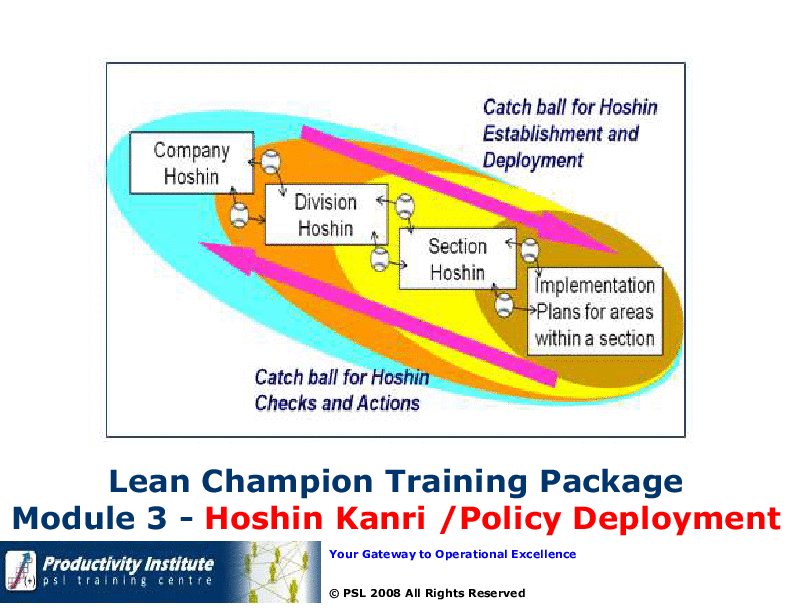
The 3rd Module "Hoshin Kanri Policy Deployment" covers the following topics:
• What is Hoshin Kanri?
• What does it do for us?
• How do we use it?
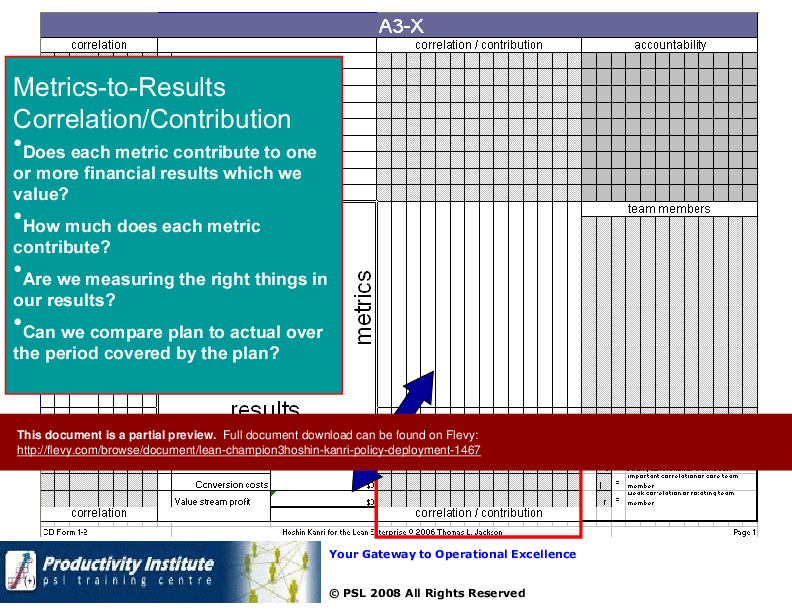
• What is an "X Chart?"
• What are resources for Hoshin Kanri?
You can also buy all the 15 modules at a 25% discounted as a bundled product.
Also add other presentations depending on your requirements, such as Kanban Implementation, Heijunka Implementation, Site Review Check List, Lean Assessment, Lean Leader and Lean Culture Surveys and BSC Assessment.
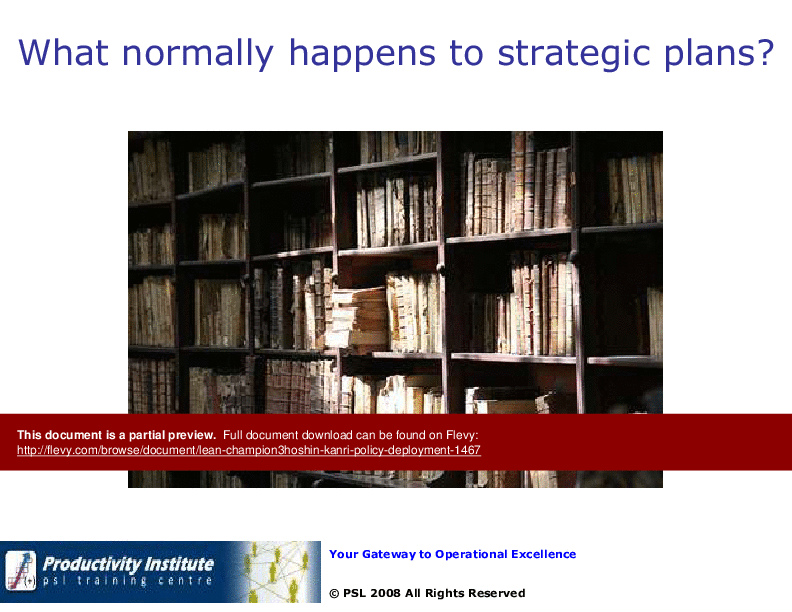
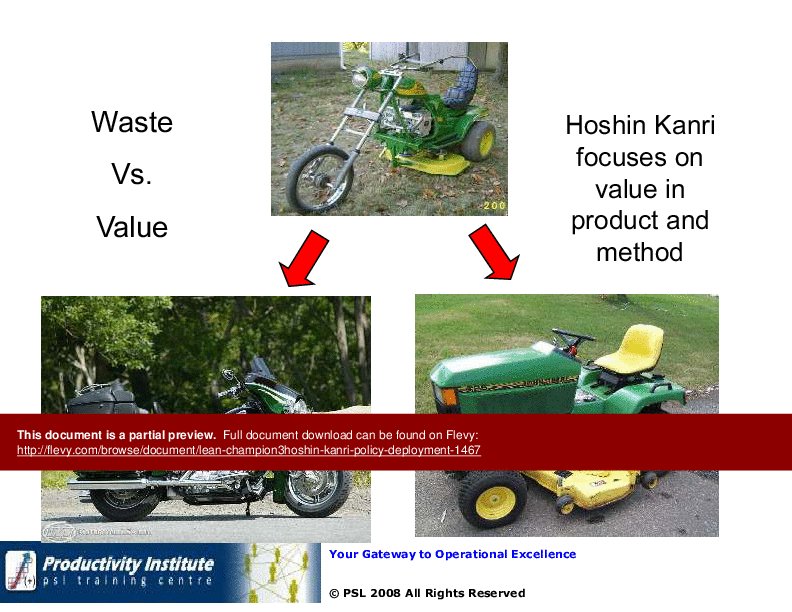
This module delves into the practical aspects of Hoshin Kanri, emphasizing the importance of aligning strategic objectives with actionable tactics. It includes detailed guidance on creating and using X-Charts to ensure that every team member understands their role in achieving the overarching goals. The content also highlights the necessity of balancing waste reduction with value creation, ensuring that your strategic plans don't just gather dust on a shelf. This module is essential for leaders aiming to drive meaningful change and operational excellence in their organizations.
Got a question about the product? Email us at support@flevy.com or ask the author directly by using the "Ask the Author a Question" form. If you cannot view the preview above this document description, go here to view the large preview instead.
Executive Summary
The Lean Champion Black Belt 3 - Hoshin Kanri Policy Deployment presentation is a comprehensive training module designed to equip professionals with the skills necessary to implement effective strategic planning through Hoshin Kanri. Developed by a Lean Six Sigma Master Black Belt with extensive global training experience, this presentation provides actionable insights into aligning organizational goals with daily operations. Participants will learn to construct X-Charts, engage in project initiation and execution, and reflect on outcomes to drive continuous improvement.
Who This Is For and When to Use
• Senior management teams responsible for strategic planning and execution
• Project managers overseeing operational initiatives
• Lean practitioners and consultants looking to enhance their Hoshin Kanri skills
• Cross-functional teams involved in policy deployment and performance tracking
Best-fit moments to use this deck:
• During strategic planning sessions to align goals across the organization
• When initiating new projects that require clear accountability and tracking
• In workshops focused on continuous improvement and operational excellence
Learning Objectives
• Define Hoshin Kanri and its role in strategic planning
• Construct and utilize an X-Chart for visualizing strategic alignment
• Initiate and execute projects effectively with clear accountability
• Reflect on project outcomes to identify areas for improvement
• Communicate strategic directives clearly across all levels of the organization
• Measure the effectiveness of strategic initiatives using key metrics
Table of Contents
• Introduction to Hoshin Kanri (page 3)
• The Central Challenge of Strategic Planning (page 5)
• Key Skills Required for Hoshin Kanri (page 10)
• Planning and Communication (page 12)
• Understanding the X-Chart (page 15)
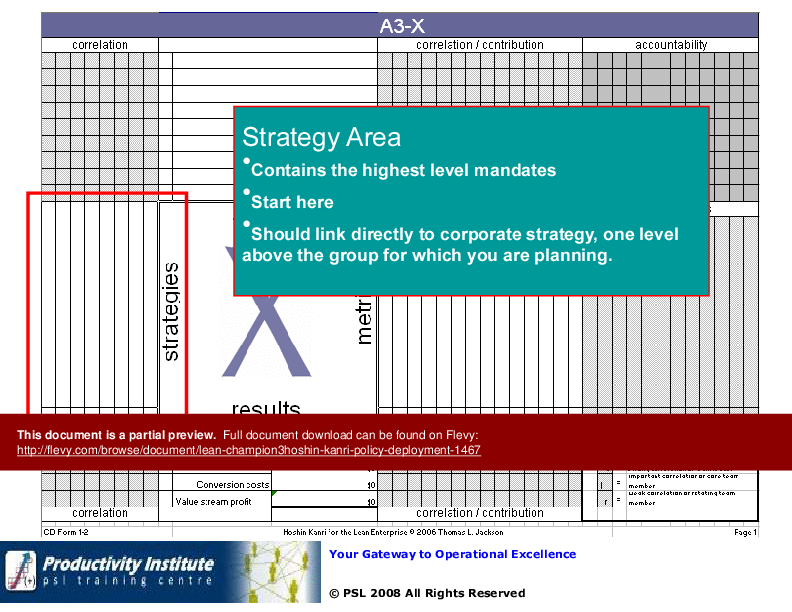
• Strategy Area and Metrics Area (page 18)
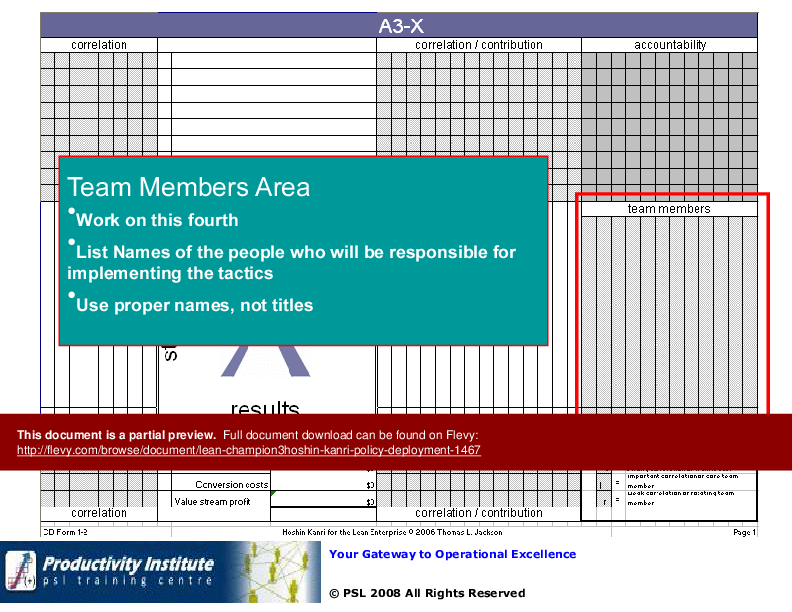
• Tactics Area and Team Members Area (page 20)
• Results Area and Connectional Areas (page 22)
• Project Initiation and Execution (page 25)
• Reflection and Continuous Improvement (page 30)
• Resources for Hoshin Kanri (page 35)
Primary Topics Covered
• Hoshin Kanri Definition - A method for implementing strategy that ensures alignment between high-level goals and daily operations.
• X-Chart Construction - A visual tool that links strategic objectives with tactical actions and responsible team members.
• Strategic Alignment - Ensures that all activities are directed towards achieving corporate goals, enhancing overall effectiveness.
• Project Management - Focuses on initiating, executing, and reviewing projects to maintain accountability and progress.
• Reflection and Learning - Emphasizes the importance of reviewing outcomes to foster continuous improvement and learning.
• Communication Techniques - Highlights effective methods for conveying strategic directives to engage all levels of staff.
Deliverables, Templates, and Tools
• X-Chart template for visualizing strategic alignment and accountability
• Project charter template for initiating and managing projects
• Weekly project review checklist for tracking progress and accountability
• Reflection and learning framework to assess project outcomes
• Resource list for further reading on Hoshin Kanri and Lean methodologies
Slide Highlights
• Overview of Hoshin Kanri and its significance in strategic planning
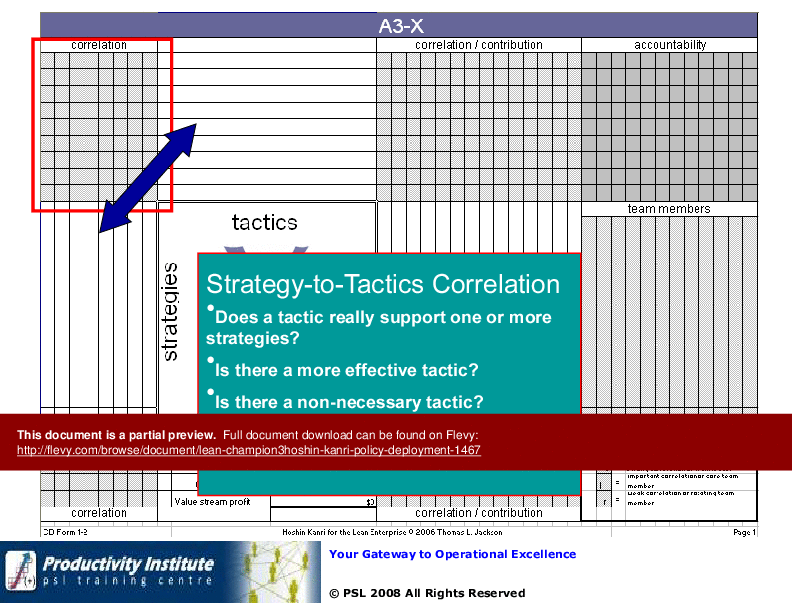
• Detailed explanation of the X-Chart and its components
• Visual representation of the strategy-to-tactics correlation
• Case study of PDCA Plastics and its implementation of Hoshin Kanri
• Key metrics for measuring success in strategic initiatives
Potential Workshop Agenda
Introduction to Hoshin Kanri (60 minutes)
• Discuss the principles of Hoshin Kanri and its application
• Overview of the X-Chart and its construction
Project Initiation and Execution (90 minutes)
• Breakout sessions to create project charters
• Review accountability and project tracking methods
Reflection and Continuous Improvement (60 minutes)
• Group discussions on lessons learned from past projects
• Strategies for fostering a culture of reflection
Customization Guidance
• Tailor the X-Chart to reflect specific organizational goals and metrics
• Adjust project charter templates to align with company standards and practices
• Incorporate unique terminology and frameworks relevant to your organization
Secondary Topics Covered
• The role of leadership in driving Hoshin Kanri initiatives
• Techniques for effective communication of strategic goals
• The impact of organizational culture on policy deployment
• Tools for measuring and tracking performance metrics
FAQ
What is Hoshin Kanri?
Hoshin Kanri is a strategic planning method that aligns an organization’s goals with its daily operations, ensuring that everyone is working towards the same objectives.
How do I construct an X-Chart?
An X-Chart is created by linking strategic objectives to specific tactics, metrics, and responsible team members, facilitating clear communication and accountability.
What are the key skills required for successful Hoshin Kanri implementation?
Key skills include planning and communication, project initiation and execution, and the ability to reflect on outcomes for continuous improvement.
How can I measure the effectiveness of Hoshin Kanri initiatives?
Effectiveness can be measured through key performance indicators (KPIs) that track progress against strategic goals and project outcomes.
What resources are available for further learning on Hoshin Kanri?
Recommended resources include "Hoshin Kanri for the Lean Enterprise," "Getting the Right Things Done," and "Leadership and Self-Deception."
How often should projects be reviewed?
Projects should be reviewed weekly to ensure accountability, track progress, and make necessary adjustments.
What should I do if a project is not meeting its goals?
If a project is off track, assess the reasons for the deviation, engage with the responsible team member, and adjust the project plan or resources as needed.
What is the importance of reflection in Hoshin Kanri?
Reflection allows teams to learn from past experiences, identify what worked and what didn’t, and improve future project outcomes.
Glossary
• Hoshin Kanri - A strategic planning method for aligning goals with daily operations.
• X-Chart - A visual tool that links strategies, tactics, metrics, and accountability.
• Project Charter - A document that outlines the objectives, scope, and participants of a project.
• Metrics - Quantifiable measures used to assess performance and progress.
• Reflection - The process of reviewing outcomes to learn and improve future initiatives.
• Kaizen - A continuous improvement methodology focusing on incremental changes.
• Accountability - The obligation of team members to report on their progress and results.
• Strategy - A plan of action designed to achieve long-term goals.
• Tactics - Specific actions or steps taken to implement a strategy.
• Results - The outcomes achieved from implementing strategies and tactics.
• Connectional Areas - Sections of the X-Chart that facilitate discussion and alignment among team members.
• Continuous Improvement - Ongoing efforts to enhance products, services, or processes.
Source: Best Practices in Hoshin, Lean Six Sigma Black Belt PowerPoint Slides: Lean Champion Black Belt 3 - Hoshin Kanri Policy Deployment PowerPoint (PPT) Presentation Slide Deck, OpEx Academy NZ
This document is available as part of the following discounted bundle(s):
Save %!
Lean Champion Black Belt Training Series - 15 Modules
This bundle contains 15 total documents. See all the documents to the right.
Save %!
PSL - Lean Execution Bundle
This bundle contains 11 total documents. See all the documents to the right.
|
Receive our FREE presentation on Operational Excellence
This 50-slide presentation provides a high-level introduction to the 4 Building Blocks of Operational Excellence. Achieving OpEx requires the implementation of a Business Execution System that integrates these 4 building blocks. |